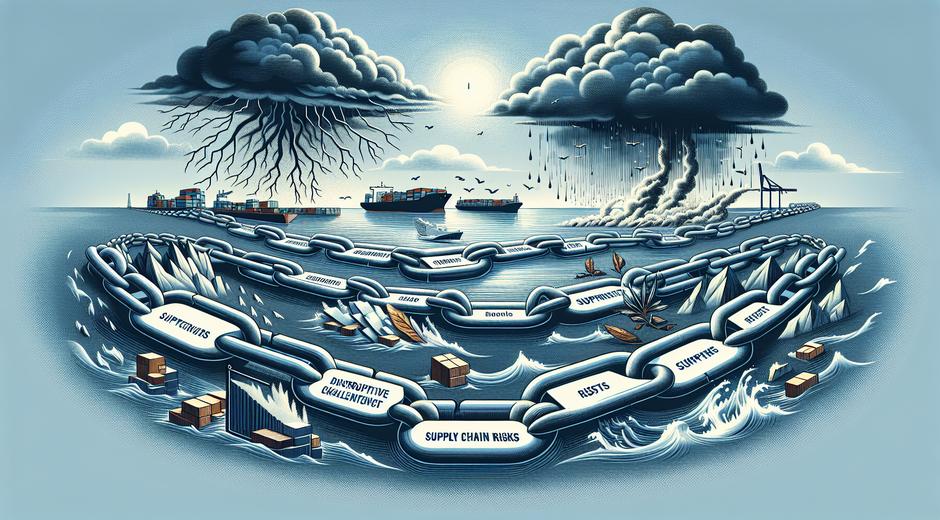


Supply chain risks
In a global market where goods travel through many hands and ports before reaching the final customer, understanding Supply chain risks is essential for any business that wants to remain profitable and resilient. This article explores the main types of Supply chain risks, how to assess them, practical strategies for mitigation, and why finance leaders and supply chain managers must collaborate closely to protect cash flow and business continuity.
What are Supply chain risks and why they matter
Supply chain risks are events or conditions that can disrupt the flow of goods, services, information or money across the network of suppliers, manufacturers, logistics providers and customers. These risks can be operational, financial, regulatory or environmental. When unaddressed they can lead to lost revenue, delayed deliveries, higher costs and damaged reputation. For finance teams the direct impacts include increased working capital needs, impaired receivables and unexpected costs that erode margins.
Common types of Supply chain risks
Identifying the types of Supply chain risks your business faces is the first step in designing an effective response. Common categories include:
- Supplier failure or insolvency which can halt production
- Transportation delays caused by congestion, labor disputes or regulatory inspections
- Quality issues that lead to product recalls and warranty claims
- Demand volatility where sudden shifts create excess inventory or stockouts
- Geopolitical events or trade policy changes that restrict access to sources or markets
- Natural events like floods or storms that damage facilities or infrastructure
- Cyber threats that compromise systems for order processing, inventory or shipping
Each of these can ripple from operations into finance. For example when a supplier fails, a finance team may need to accelerate payments to alternate vendors or finance expedited freight. That increases cash outflow and can press borrowing lines.
How to assess Supply chain risks effectively
An effective risk assessment combines qualitative judgement with quantitative metrics. Start by mapping your supply chain to reveal critical nodes and single points of failure. For each supplier or logistics route collect data on lead time variability, financial health, quality performance and geographic exposure. Use scoring to rank risk severity and likelihood. Triage high risk items and routes for immediate attention.
Key performance indicators that help quantify risk include lead time variance, fill rate, days payable outstanding and days inventory outstanding. Stress testing the supply chain against scenarios such as port closure or sudden demand surge helps finance and operations plan liquidity and inventory buffers.
Risk mitigation strategies that drive results
Mitigating Supply chain risks requires a mix of strategic changes and tactical controls. The most effective programs are cross functional and align procurement, operations, logistics and finance. Proven strategies include:
- Diversify suppliers to avoid single points of failure
- Maintain strategic inventory for critical components while optimizing carrying cost
- Invest in supplier development and contract clauses that provide flexibility
- Use multi modal logistics to reduce reliance on a single transport corridor
- Implement robust quality checks to detect defects early and avoid costly recalls
- Strengthen cyber security for systems that support orders and inventory
- Create contingency plans that specify triggers and actions for common disruption scenarios
Each action must be evaluated against cost and benefit. For example keeping higher inventory reduces stockout risk but increases working capital. That trade off is a finance decision as much as an operations decision.
The role of technology in reducing Supply chain risks
Technology is a key enabler for visibility and responsiveness. Real time tracking, integrated planning tools and predictive analytics allow teams to see disruptions early and respond with speed. Cloud based platforms help connect data across suppliers and carriers so exceptions are flagged and resolved. For finance teams integration with enterprise resource planning systems ensures that financial planning reflects operational realities and that cash flow scenarios include potential disruption costs.
Emerging technologies such as artificial intelligence and machine learning improve demand forecasting and anomaly detection. Blockchain can enhance traceability and authentication especially in industries where provenance matters. Investment in the right tech stack should be prioritized based on the specific Supply chain risks your business faces.
How to build a resilient supply chain step by step
Resilience is not a one time project it is an ongoing capability. A practical roadmap includes:
- Map your supply chain and identify critical suppliers and routes
- Assess risks using a consistent scoring model and prioritize actions
- Define governance with clear roles for procurement operations and finance
- Invest in visibility tools and data integration across systems
- Establish contingency plans and test them through drills
- Monitor supplier financial health and diversify where risk is concentrated
- Review and update plans regularly as markets and technologies evolve
By following these steps finance leaders can better plan for cash needs and reduce the likelihood that an operational disruption becomes a financial crisis.
Case examples and lessons learned
Many firms learned hard lessons when disruptions exposed concentrated sourcing and poor visibility. In one example a manufacturer relied on a single source for a key component. When that supplier faced an operational shutdown the manufacturer faced months of delay and had to pay premium prices to secure alternate supply. A finance leader who had scenario models and prearranged credit lines could move faster to stabilize operations. The lesson is to combine supplier diversification with financial contingency planning.
Retailers that invest in demand sensing and agile logistics are often better positioned to cope with sudden shifts in consumer behavior. Technology and cross functional collaboration are recurring themes in success stories.
Why collaboration between finance and operations matters
Addressing Supply chain risks requires shared accountability. Operations understand lead times and quality issues while finance models cash flow and cost impact. When both teams work together they can choose the optimal mix of inventory buffers, supplier terms and financing approaches. Collaboration yields decisions that protect service levels while preserving margin and liquidity.
To foster collaboration create joint risk committees, share performance dashboards and align incentives so both teams value resilience as much as efficiency.
Where to find more resources and expert insight
For business leaders wanting a central finance perspective on supply chain topics visit financeworldhub.com where you will find practical guides, case studies and tools tailored to cross functional decision making. For industry specific logistics insight and vendor trends consider resources offered by specialized outlets such as SportSoulPulse.com which covers sports gear and apparel supply networks and related logistics topics.
Conclusion
Supply chain risks are a strategic concern that touches operations, finance and customer experience. By mapping risk exposures assessing impact and investing in visibility and contingency planning companies can reduce the frequency and severity of disruptions. The best approach pairs technology with cross functional governance and financial planning so that when a disruption occurs the business can respond quickly and preserve cash and customer trust. Start with a focused risk assessment and build a program that scales with your operations and market footprint.