

Financial Market Cycles: How to Read Patterns and Make Smarter Investment Choices
Understanding Financial Market Cycles is essential for investors who want to navigate risk and opportunity with greater clarity. Market cycles describe repeating patterns of expansion and contraction in asset prices and economic activity. Recognizing where we are in a cycle can help you tailor asset allocation manage risk and seize growth opportunities. For ongoing insights and resources on markets and investing visit financeworldhub.com where our guides explore cycle analysis for different investor goals.
What Are Financial Market Cycles?
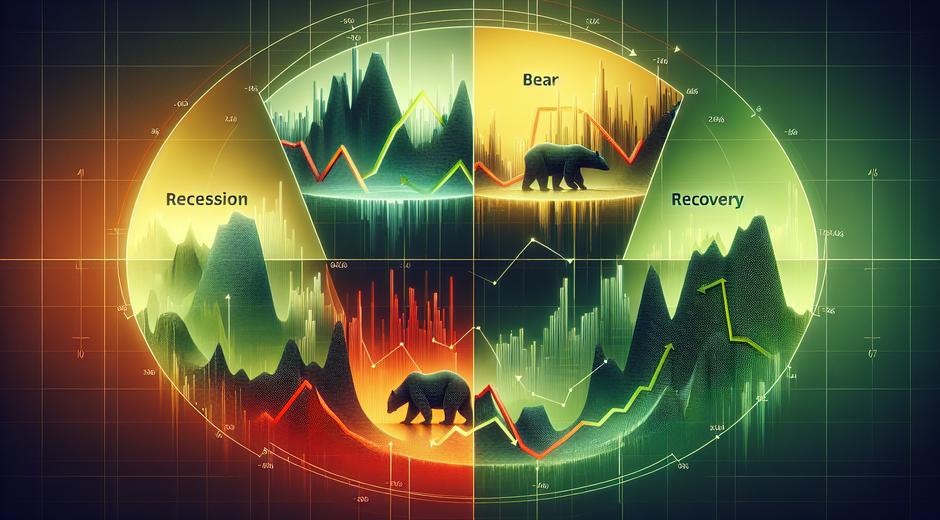
Financial Market Cycles are the natural rhythms through which markets move over time. They capture phases of optimism and pessimism that drive buying and selling behavior. These cycles are influenced by shifts in economic fundamentals corporate profits monetary conditions and investor psychology. While every cycle has unique triggers the overall pattern tends to repeat which makes cycle awareness a powerful tool for planning.
Key Phases of a Financial Market Cycle
Accumulation Phase
The accumulation phase follows a period of negative sentiment and falling prices. Smart money institutional investors and long term investors begin to build positions quietly. Volume may be moderate and headlines often remain negative. This phase can last for months or for years depending on the severity of the prior decline. For investors the accumulation phase is a time to prepare to add quality holdings in size over time while preserving liquidity.
Markup Phase
In the markup phase prices rise more consistently as optimism returns. Broader participation moves into the market which pushes valuations higher. Earnings growth and improving economic signals often validate the advance which in turn attracts more buyers. Momentum driven trading becomes more common and risk taking increases. Investors who entered earlier typically see substantial gains while those who arrive later may pay premium prices.
Distribution Phase
During distribution the market shows mixed messages. Price action may reach new highs but breadth narrows as fewer stocks lead the advance. Informed sellers reduce exposure while bullish sentiment remains strong among the general public. This phase can be deceptive because performance still looks good though underlying health is deteriorating. Recognizing signs of distribution can help protect gains by trimming position sizes and raising cash.
Markdown Phase
The markdown phase is characterized by accelerating selling and falling prices. Negative news and deteriorating fundamentals amplify fear. Losses become more widespread and liquidity can decline. This phase typically ends when valuations and sentiment hit levels that attract long term buyers again and the cycle moves back toward accumulation. Preservation of capital is the main investor priority during markdown periods.
Core Indicators to Track Financial Market Cycles
Monitoring a set of complementary indicators improves the odds of correctly identifying cycle phases. No single metric is decisive so combine data points from several categories.
Economic indicators such as GDP growth employment rates and manufacturing activity provide context about the real economy. Corporate earnings and profit margins help confirm whether price moves are supported by fundamentals. Market internals like breadth volume and sector leadership reveal whether moves are broad based or narrow. Interest rates credit conditions and currency moves offer signals about monetary influences. Finally investor sentiment measures and positioning data show whether optimism or fear is extremes that hint at upcoming reversals.
Practical Strategies for Investors by Cycle Phase
Adapting strategies to the current cycle can improve outcomes and reduce stress. Here are practical approaches investors can adopt aligned to each phase.
During accumulation focus on disciplined entry over time. Dollar cost averaging quality assets reduces timing risk. Emphasize valuation and margin of safety. In the markup phase increase exposure to growth oriented sectors while using rules based trailing stops to protect profits. During distribution gradually take profits rebalance toward lower volatility assets and increase exposure to cash or short term income producing instruments. In markdown prioritize capital preservation use defensive sectors and consider opportunistic buying on clear signs of stabilization.
Time Horizon and Risk Profile Matter
How you use cycle signals depends on your time horizon and risk tolerance. Short term traders can benefit from cycle aware tactics that exploit momentum and mean reversion. Long term investors do not need to move in and out of markets frequently but can still gain by adjusting allocation risk exposure and contribution rates to take advantage of valuation differentials across phases. Institutional investors often use overlays and derivatives for efficient implementation while retail investors may focus on core satellite structures and tax efficient rebalancing.
Common Pitfalls When Using Cycle Analysis
Relying on cycle analysis comes with common traps to avoid. Timing the exact top or bottom is notoriously difficult so avoid trying to be perfect. Overreacting to short term noise can lead to costly mistakes. Another issue is confirmation bias where investors see only data that supports their preferred view. Using a rules based approach documented in a plan reduces emotional mistakes. Finally be mindful of costs taxes and liquidity when shifting allocations frequently.
Integrating Cycle Awareness with Fundamental Research
Cycle awareness should complement not replace rigorous fundamental analysis. A business with solid revenue growth strong cash flow and a durable competitive advantage will likely weather cycles better than a speculative asset. Combining cycle timing with careful selection improves the probability of favorable long term outcomes. For busy investors using curated resources and trusted guides can save time and improve decision quality. If you are managing family finances consider practical lifestyle and planning resources at CoolParentingTips.com which offers guidance on balancing budget planning and saving goals with everyday needs.
Final Thoughts on Financial Market Cycles
Financial Market Cycles are a foundational concept for sound investing. Awareness of cycle phases and the indicators that signal shifts helps investors protect capital and capture upside more effectively. Remember that cycles repeat but never look identical so flexibility discipline and a clear plan are crucial. Use cycle analysis as one lens among many to make informed decisions consistent with your objectives. With persistent learning and prudent execution you can use cycle awareness to improve long term outcomes while staying prepared for the inevitable shifts that markets present.