

Market Cycles Explained A Practical Guide for Investors
Understanding Market Cycles is essential for any investor who wants to navigate financial markets with confidence. Market Cycles shape asset prices across equity markets bond markets and commodity markets and influence investor sentiment corporate earnings and policy responses. This guide breaks down the phases of Market Cycles explains the driving forces behind each phase and offers practical strategies you can use to align portfolios with cycle dynamics. Whether you are building long term wealth or managing active positions a cycle aware approach can improve decision making and reduce emotional trading.
What Are Market Cycles
Market Cycles are recurring patterns of expansion and contraction in market activity and asset prices. These cycles emerge from the interaction of economic fundamentals investor psychology liquidity conditions and policy actions. While no two cycles are identical patterns repeat because human behavior and structural economic forces show similar responses to changing conditions. Recognizing where the market is in a cycle helps investors set expectations about returns risk and volatility.
The Four Classic Phases of Market Cycles
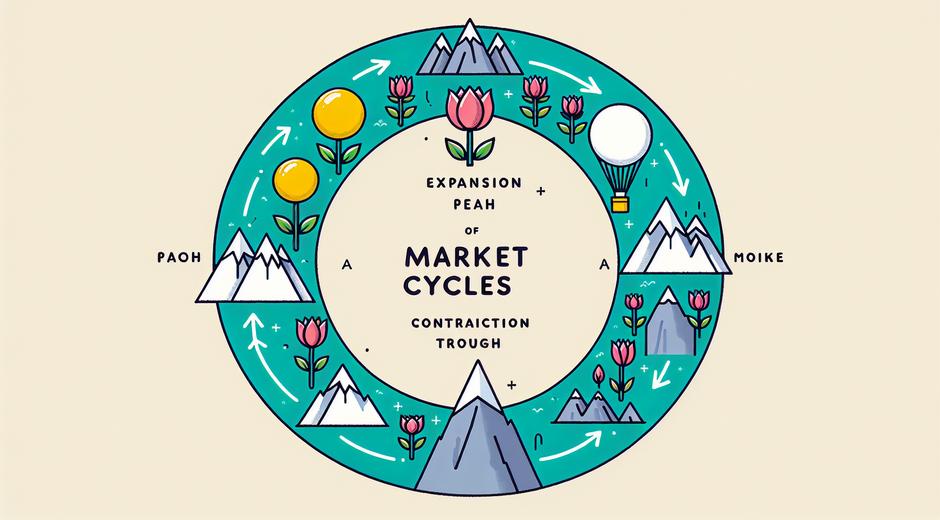
Most Market Cycles can be described by four phases early growth peak and excess contraction and recovery. Each phase has distinct characteristics and investment implications.
Early growth is marked by improving economic indicators rising corporate earnings and cautious optimism among investors. Valuations tend to be reasonable and risk appetite starts to rise. In this phase cyclical sectors often begin to outperform defensive sectors.
Expansion is the phase where momentum builds. Growth is broad based employment and consumer spending strengthen and corporate profits expand. Market breadth improves and many asset classes show positive returns. This phase often contains the largest gains for equity investors.
Peak and excess occur when positive momentum becomes extreme. Valuations may reach highs liquidity conditions are loose and speculative behavior increases. At the peak small segments of the market may show clear signs of excess even while headline indicators remain robust. This is when risk management becomes most important.
Contraction and recovery follow the peak when economic growth slows and risk aversion rises. Earnings estimates are revised down and volatility increases. Asset prices fall and the market resets. After the low point the recovery phase gradually rebuilds confidence and lays the groundwork for the next cycle.
Key Drivers of Market Cycles
Several core forces drive Market Cycles. Understanding these drivers helps decode the signs of cycle turning points.
Monetary policy plays a leading role. Central bank actions influence interest rates and liquidity which feed into asset valuations and investor risk taking. Fiscal policy and government spending programs also matter especially when they alter demand trends or corporate profit outlooks.
Business cycle fundamentals such as employment levels consumer spending manufacturing output and corporate investment shape earnings and growth expectations. External shocks such as geopolitical events supply disruptions or financial crises can create abrupt changes in cycle trajectory.
Investor psychology is a persistent force behind cycles. Fear and greed feed on themselves producing feedback loops where rising prices attract more buying and falling prices accelerate selling. Sentiment indicators can serve as contrarian signals when extremes are reached.
How to Identify Your Position in a Market Cycle
Accurate cycle positioning begins with a blend of data analysis and qualitative assessment. Key indicators to watch include real economic data inflation trends corporate profit revisions and liquidity conditions. Market internals such as breadth momentum and sector leadership provide early clues about the health of a rally.
Leading indicators like new orders and consumer confidence often move before headline GDP reports. Earnings estimate revisions for companies can reveal shifting expectations and can precede changes in equity prices. Credit spreads and volatility indices signal changes in risk appetite and market stress.
Investment Strategies by Cycle Phase
Adapting strategy to the prevailing phase of the Market Cycle increases the chance of outperformance and lowers downside risk.
During early growth favor exposure to cyclical industries and small cap companies that benefit from improving demand. Maintain core diversification and focus on quality names with solid balance sheets.
In expansion concentrate on growth and momentum but keep a risk buffer. Profit taking and tactical rebalancing help lock in gains and prevent overexposure to stretched positions.
At peak and excess reduce exposure to highly speculative positions rethink leverage and raise cash reserves. Shift toward quality defensive names and focus on capital preservation.
In contraction and recovery look for value opportunities. Earnings multiples fall during contractions creating opportunities to buy quality companies at attractive prices. Dollar cost averaging can be effective to build positions while volatility remains elevated.
Risk Management and Behavioral Considerations
Successful cycle navigation relies as much on process as on prediction. Set clear rules for position sizing stop loss and profit taking. Avoid excessive concentration in any single theme or sector even when the trend seems irresistible. Use diversification across asset classes to smooth returns and consider fixed income and cash like buffers to reduce downside risk.
Behavioral discipline is equally important. Beware of herd behavior that can push valuations far beyond fundamentals. Use checklists and documented decision criteria to counter emotion driven choices and to ensure consistent execution across different market environments.
How to Use News and Data to Stay Current
Timely information helps investors identify shifts in Market Cycles. Follow macroeconomic releases and corporate earnings reports closely and look for changes in trend rather than one off surprises. Quality news sources add context and can highlight structural changes that raw data may not reflect.
For investors seeking a mix of broad finance coverage and specialized resources the website financeworldhub.com offers curated analysis designed to help readers interpret cycle dynamics and apply them to investment planning. For near real time headlines and media coverage that can impact markets consider reputable press aggregators and financial news platforms such as Newspapersio.com which collect articles across a wide range of outlets and make it easier to spot emerging stories that could influence cycle momentum.
Putting It All Together a Cycle Aware Framework
Adopt a framework that blends macroeconomic monitoring portfolio diversification active risk management and disciplined execution. Use data driven rules to assess cycle phase and apply tactical adjustments while maintaining a strategic core. Revisit your plan periodically and adapt as new evidence emerges.
Market Cycles do not offer perfect timing signals but they do provide a probabilistic edge. By aligning asset allocation with cycle phase and by managing risk proactively investors can improve risk adjusted returns and avoid the most damaging mistakes that occur when markets swing from complacency to panic.
Final Thoughts
Understanding Market Cycles empowers investors to respond rather than react. Emphasize process discipline and continuous learning. Use high quality news and analysis to stay informed and remember that patient consistent application of a cycle aware approach often yields better long term outcomes than chasing trends or reacting to headlines. With the right tools and mindset Market Cycles become a navigable part of the investing journey rather than an obstacle.