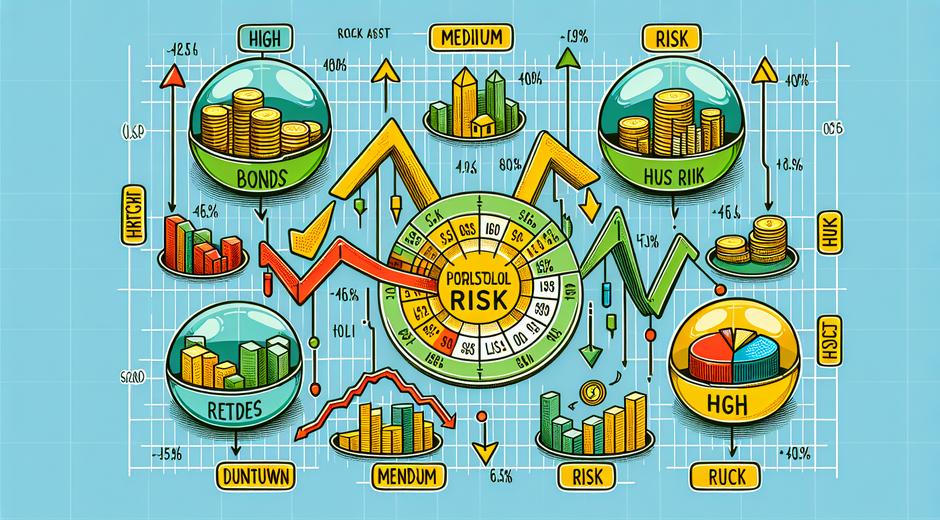


Portfolio Risk: A Complete Guide to Managing Investment Uncertainty
Understanding Portfolio Risk is essential for any investor who wants to build wealth while protecting capital. Portfolio Risk is the likelihood that the actual return on a group of investments will differ from the expected return. That difference can include outcomes that are worse than expected. This guide explains the sources of risk how to measure risk and practical steps to manage risk so you can make better investment decisions and improve long term outcomes.
What Portfolio Risk Means for Investors
Portfolio Risk does not mean that loss is certain. It means that outcomes vary. Volatility is one visible sign of risk yet not every movement implies permanent loss. For example equity markets often show wide price swings over short periods while delivering solid returns over decades. Fixed income assets tend to show less volatility yet carry credit risk and inflation risk. The key is to align risk exposure with goals time horizon and personal tolerance.
Major Types of Portfolio Risk
Investors face several common categories of Portfolio Risk. Knowing each type helps build a balanced approach.
Market risk is the risk that the entire market or a broad sector will decline. Interest rate risk affects bonds and other income assets when rates rise or fall. Credit risk affects issuers ability to meet obligations. Liquidity risk occurs when an asset cannot be sold quickly at a fair price. Currency risk impacts returns for investments denominated in a foreign currency. Concentration risk arises when holdings are heavily weighted in one asset or theme. Behavioral risk reflects the tendency of investors to react emotionally which can magnify losses.
How to Measure Portfolio Risk
Quantifying Portfolio Risk lets you compare options and set limits. Core statistical tools include variance and standard deviation which measure historical dispersion of returns. Correlation and covariance indicate how assets move relative to each other. Combining low correlation assets reduces overall portfolio volatility through diversification.
Beta measures sensitivity to a chosen benchmark. A high beta indicates greater movement relative to the market. Value at Risk often abbreviated to VaR estimates the worst expected loss over a given time frame at a specified confidence level. Scenario analysis and stress testing explore extreme but plausible events to reveal vulnerabilities. Monte Carlo simulation models thousands of possible future paths to estimate probabilities for a range of outcomes. Using several measurements together gives a fuller picture than any single metric.
The Role of Diversification
Diversification is the cornerstone of reducing Portfolio Risk. By combining assets that do not move in perfect sync you can lower volatility without sacrificing expected return. Diversification works across asset classes equity styles geographic regions sectors and strategies. Remember that diversification reduces certain types of risk but it cannot eliminate market wide shocks that affect most assets at once.
Portfolio Construction Strategies
Constructing a portfolio that matches financial goals begins with defining objectives time horizon and liquidity needs. From there investors choose an asset mix consistent with their risk tolerance. A common approach is to set strategic allocations and review them at regular intervals. Tactical adjustments may be made to exploit market conditions yet should follow a disciplined process.
Risk budgeting assigns a maximum allowable contribution of each holding to total portfolio risk. This creates constraints that prevent excessive exposure to a single driver of loss. Rebalancing is the practice of returning the portfolio to target weights and it naturally enforces periodic selling of winners and buying of laggards. Proper rebalancing reduces drift and maintains the intended risk profile.
Risk Management Tools and Techniques
Risk management combines measurement governance and action. Stop loss orders can limit losses on individual positions but they do not protect against gaps in price during extreme events. Hedging with options futures or other derivatives can reduce downside exposure yet these tools require expertise and may add cost. Insurance like principal protected notes can offer downside protection for a fee.
Position sizing is a simple yet powerful technique. Limit the size of any single holding relative to the total portfolio so that a large loss in one name does not derail the plan. Stress testing anticipated shocks such as rapid interest rate moves major currency swings or sudden liquidity constraints helps prepare contingency plans. Clear rules for when to trim or add exposure help avoid emotionally driven choices.
Assessing Risk Adjusted Performance
It is not enough to chase returns without regard to the risk taken. Risk adjusted metrics reveal how efficiently a portfolio converts risk into return. The Sharpe ratio divides excess return over the risk free rate by portfolio volatility and is widely used to compare strategies. The Sortino ratio focuses on downside volatility which some investors find more relevant. Comparing risk adjusted performance across candidates helps select strategies that deliver attractive returns without undue risk.
Behavioral Considerations in Managing Portfolio Risk
Human behavior is a major source of risk. Investors often buy after prices rise and sell after prices fall which locks in losses. Developing a written plan that specifies targets risk limits and rebalancing rules reduces the chance of emotional mistakes. Regular education and periodic review of goals help maintain discipline when markets become noisy.
Practical Steps to Reduce Portfolio Risk
There are actionable steps every investor can take to reduce unwanted Portfolio Risk. Start by clarifying objectives and time horizon then evaluate current holdings versus target allocations. Increase diversification where concentration is present. Consider low cost index funds or exchange traded funds to gain broad exposure. Use cash as a buffer for short term needs to avoid selling investments at an inopportune time. Maintain an emergency reserve that covers several months of living expenses. Finally document a plan for rebalancing and stick to it through cycles.
Where to Learn More and Find Tools
For ongoing education tools and market commentary visit resources that specialize in practical investing guidance. Our site provides comprehensive guides data and calculators to help you apply these concepts in real time. For additional perspectives and curated tools try financeworldhub.com which offers articles and insights across all finance categories. You can also explore third party platforms for portfolio analytics trading ideas and market research by checking reputable publishers and review sites such as StyleRadarPoint.com which posts curated content and comparisons that can complement your learning.
Conclusion
Portfolio Risk is an unavoidable part of investing yet it can be measured managed and minimized. A disciplined approach that blends diversification measurement governance and periodic rebalancing will improve the odds of achieving financial goals. Combine robust quantitative tools with clear behavioral rules and you will be better prepared for the inevitable uncertainties of markets. Regularly revisit objectives and adjust the plan as life circumstances evolve. With deliberate action Portfolio Risk becomes a manageable element of a long term investment strategy.